What inspired you to undertake the 10-mile diet project?
I lived with the Ecological Footprint graphs (what we have and what we spend as a human community on a finite planet) and knew we were in overshoot, far out of balance. I knew we’d shot past 350 parts per million CO2 in the atmosphere with no brakes on the runaway climate train. When I learned the data about Peak Oil/Gas/Coal/Uranium/You-name-it and paired that with Climate Change, the picture was even starker.
For me, relocalization — revitalizing regional economies and ways of life — became the one sane choice.
Working locally on Whidbey Island with the Transition model brought another stark fact in view. Even here, a semi-rural community, we cannot feed ourselves for even a few weeks on what we produce.
As author of Your Money or Your Life, I’d challenged Americans’ relationship with money and stuff — but our food addiction was “off the table” so to speak . . . because my own hand was in the cookie jar. I had been a dieting, binging, weight-obsessed American woman for 6+ decades — and considered it none of anybody’s business.
But when I see the truth of something, I want to test whether I can actually live it. Sustainability as an extreme sport. So you can see, I’m a perfect subject for a 10-mile diet hyper-local eating experiment — I had no axe to grind about dietary correctness. I was curious and I was convinced that I was testing a limit we were all facing — unaware.
I took up the challenge. For a month. With relish (local of course).
How did your shopping and cooking practices change?
I actually bought very little food during the 10-mile experiment. This was a partnership with a farmer. She was curious whether she could actually feed someone; I was curious about this value called “local.” Before, I’d shopped the Farmers Markets as a pastime, buying a few squash or lettuce and chatting with neighbors. I bought most of my food, though, at grocery stores — and Trader Joe’s — and never wondered how those shelves were always perfectly stocked.
Now I try to have the highest-quality relationship with everything I eat. My best foods are local because they come from people I know and like, and I understand that I am actually vitalizing my local food system as I buy from these farmers. This gives my eating — and life — greater meaning as well as better food.
My grains, beans, greens, roots, squash, meats, eggs, honey, and milk are from the island. Even when the flour is from elsewhere, I like buying from local bakeries. This comes from a profound sense of belonging that arose as I ate the food of my place on earth. I’d never felt so at “home.” I call this “relational eating.”
I also understand the economics and practices of industrial food and even though I honestly like a lot of anywhere food, I am aware that I am eating the injustice, toxicity, economic distortion, soil depletion of that food — and the health consequences as well. I’m not a purist at all. I’m just awake.
As for cooking, the diet taught me to use what’s at hand and fresh rather than from cupboards or the store. I cooked from scratch, concocting soups and stews. I did allow myself a couple of “exotics” — foods from afar — because I didn’t want to live without oil, salt, or caffeine, so my dishes were very tasty.
Describe a particularly memorable meal you prepared from local ingredients.
As you know by now, I’m by long habit a value and bargain shopper. So when it came to buying a couple of chickens for my diet, I had a big struggle. Five dollars a pound! You’ve got to be kidding.
But when I calculated what it actually costs for real people — my neighbors — to grow those birds, I realized that the price ($5) was the actual cost in labor, feed, materials, and losses to raccoons and hawks. Industrial food is abnormally cheap — which is why it was so easy for me — and many others — to abuse it.
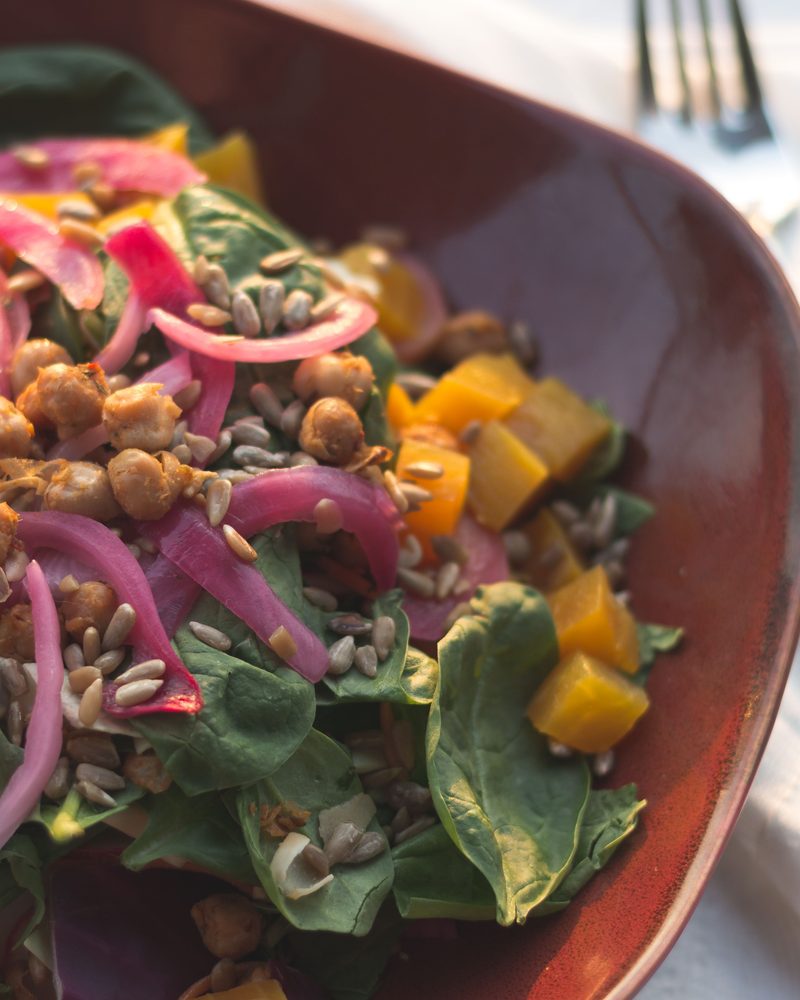
The last night of my experiment I invited Tricia — my farmer — and her husband over for dinner. I roasted one of the chickens. In the old days I would have cut the bird in quarters and we would have chowed down, leaving only bones. This chicken I sliced like a turkey. We savored every bite and were not deprived and there were leftovers. I was sure it tasted better. I roasted vegetables and served salad and we talked long into the night.