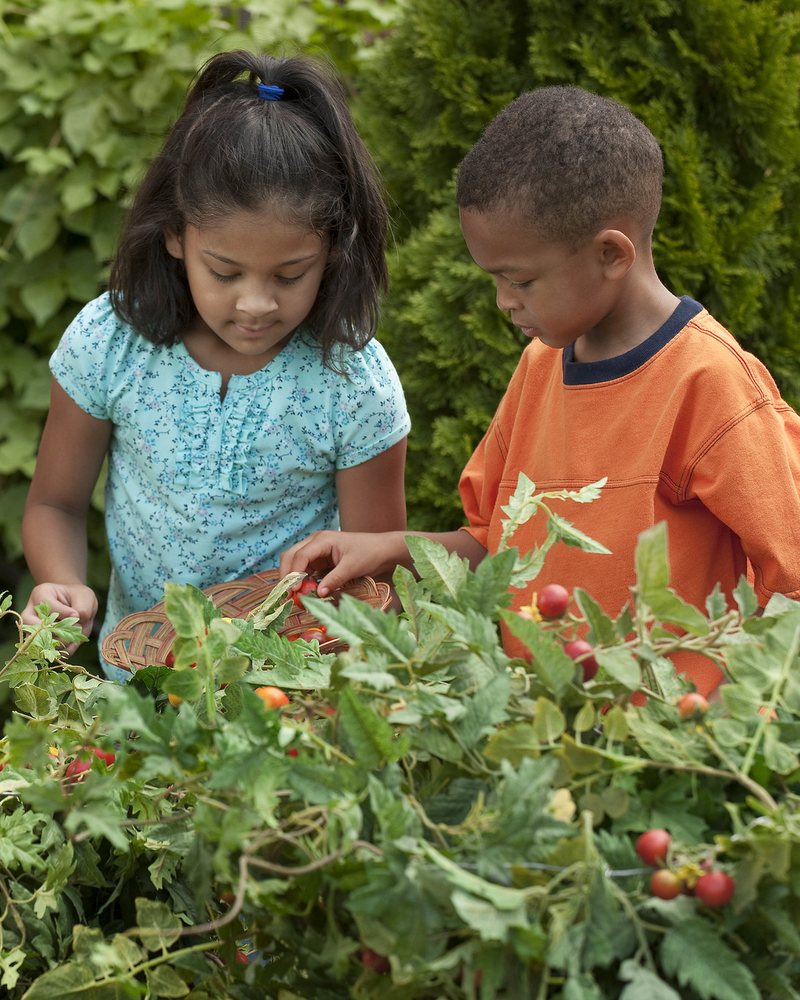
What does a successful school garden program look like?
A successful school garden has many pillars of support. It’s supported by the principal and connected to the classroom and lunchroom. Students, parents, and teachers flow in and out. All of this activity is managed by a garden coordinator, who acts like an air traffic controller.
Parents host weekend work parties to build the more complex garden structures. End-of-the-year celebrations might take place there. The sustainability initiatives of the school, such as composting or water use, are modeled in the garden. It’s really a hub for community building.
How do school gardens help expand students’ understanding of the story of their food?
Astonishingly, we no longer really understand where our food comes from. Most of our food is a plant’s bud, flower, or root. It’s something we’ve forgotten about for a couple of generations. Illustrating these concepts in a garden is revelatory for people. You see the “a-ha!” moments, when they really understand what part of the plant their food comes from and the purpose of that biology. A school garden serves as a living laboratory to demonstrate the principles of sustainability.