The story of food includes where it’s grown, and when.
 Grade
 Time
 Final product
Foods have seasons. Eating in-season, locally grown food can support local farmers, reduce transportation pollution, and provide fresher, tastier food. The choice isn’t all-or-nothing; it involves real trade-offs.
How does eating locally grown and seasonal food benefit the health of people and the environment?
Across two class periods, students investigate seasonality and local food systems.
Day 1 opens with the Nourish short film In Season, an optional sensory tasting, and a foodshed-mapping exercise using a 150-mile (240-kilometer) compass radius. Students begin building their Seasonal Food Wheel for the region. Day 2 finishes the Seasonal Food Wheel, then teams research nearby places to find local food (farmers markets, CSAs, community gardens, food co-ops). Teams contribute one page each to a class Local Food Resources booklet that goes home with families.
The lesson closes with a discussion of trade-offs: local isn’t always practical, and that’s part of the story.
Apply scientific principles to evaluate how seasonal eating and food transportation affect environmental impacts. Analyze and interpret data from maps, seasonal calendars, and foodshed models to identify patterns in food systems.
Three-dimensional emphasis. SEPs: Analyzing and Interpreting Data; Developing and Using Models. CCCs: Patterns; Cause and Effect.
MS-ESS3-3Integrate information from maps, charts, and texts to explain local and seasonal food systems. Write informative texts about benefits and tradeoffs of seasonal and local food. Engage in collaborative discussions about geography and seasonality.
RST.6-8.7 WHST.6-8.2 SL.6.1/7.1/8.1Explain how environmental and cultural factors influence food production and consumption. Explain how economic decisions in agriculture affect the well-being of communities. Evaluate how local food systems support communities while involving tradeoffs.
D2.Geo.4.6-8 D2.Eco.1.6-8 D2.Civ.12.6-8Analyze how seasonality and freshness affect personal and community health. Evaluate how access to local and seasonal food influences nutrition and well-being. Advocate for food choices that support healthier people, communities, and ecosystems.
NHES 1 NHES 2 NHES 8One important part of the story of food is how far it travels to reach us. In the past, many people grew or gathered food close to home. Today, much of our food travels long distances (sometimes across countries or continents) before reaching our plates.
When fruits and vegetables are shipped, flown, or trucked long distances, they’re often picked before they’re ripe so they can survive the journey. As a result, these foods may be less flavorful and nutritious, use more fuel, and create more pollution than locally grown alternatives. Eating locally grown foods in season can support local farmers, reduce transportation pollution, and provide fresher, more nutrient-rich foods.
However, eating only local foods isn’t always possible. In many regions, seasonal availability is limited, and a balanced diet may include foods grown elsewhere. Understanding seasonality, distance, and foodsheds helps students see food choices as part of a larger system, and weigh real trade-offs honestly.
Introduce the five terms on Day 1 after the film.
Ripe and ready to harvest nearby, in the months when a food naturally grows.
Food grown and produced close to where it is eaten, usually within the same region.
The distance from the center of a circle to its edge.
The area where food is grown and produced to feed the people who live there, like a watershed but for food.
Paying a farm in advance for a share of its harvest, delivered as regular boxes of fresh, seasonal food.
Google files open as your own editable copy. Want it all? Download the whole lesson in one ZIP. Teaching the whole unit? Download all 7 lessons or open the unit in Google Drive.
Share with a partner: one food, what season, and have you tried it.
Guess which food is local and which traveled far.
Taste the in-season food (optional). Use 3 words to describe it.
Use a compass to draw a 150-mile (240-kilometer) circle around your town on the regional map.
Notice what’s inside the circle: towns, farmland, water, mountains.
Discuss: is 150 miles (240 kilometers) a fair definition of local for our region?
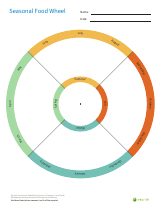
Use the regional chart to find what’s in season locally each month.
Draw and label at least 2 foods in each season’s color band.
Add 2 year-round foods to the center circle.
Store your Wheel pages safely.
Notice what’s in season this week.
Courtesy of Flag Hill Farm: Real Organic Certified
Finish drawing and labeling local foods on your Wheel.
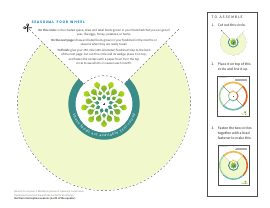
Cut out the top circle’s wedge.
Stack and fasten with a brad. Glue the 150-mile (240-kilometer) map on the back.
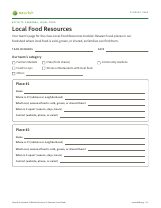
Review the Local Food Resources page with your team so you know what info to gather.
Research 3–5 places in your category.
Fill in the Local Food Resources page: name, location, what’s sold, season, contact.
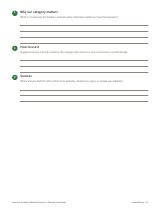
Write 2–3 sentences on why your category matters.
Hand in your team’s Local Food Resources page.
Share one benefit and one trade-off of eating local, in-season food.
Listen for trade-offs others raise.
Take home your Seasonal Food Wheel and the class Local Food Resources booklet.
Ask a family member: what season foods do you remember from when you were a kid?
Students demonstrate understanding by:
Look-fors: teams that catch outdated listings or note seasonal limits are showing strong critical reading.
Local food access varies. Some students live near farmers markets and full grocery stores; others live in food deserts. Don’t presume access; invite the conversation. The trade-offs you discuss should include access, not just freshness.
Climate context. If you teach in a longer-growing-season region, the Wheel will fill easily. In colder climates (Upper Midwest, New England, Alaska), winter will rely heavily on stored or preserved foods. Both are valid local food systems.
Students use their Seasonal Food Wheels to plan a meal made entirely from foods in season locally. They identify the dish, list ingredients with seasons, and write a paragraph explaining their choices. If kitchen access allows, the class prepares and tastes one of the dishes together.
Arrange a class visit to a local farm or farmers market. Before the visit, students generate three questions about what grows there and when. During the visit, students interview a farmer or vendor. After, students update their Seasonal Food Wheels with anything new they learned.
Students draw a garden plan using plants suitable for the current season. They research growing requirements of different vegetables and fruits, then sketch a map of the garden area showing the location of each plant.
Students use Google Earth or Google Maps to explore how land in their region is developed, undeveloped, and farmed. They analyze how land use patterns influence food production and food access.
Students write a one-page narrative from the perspective of a food traveling through its season: sprouting in early spring, ripening in summer, harvested and eaten in fall.